Sunday, February 15, 2026

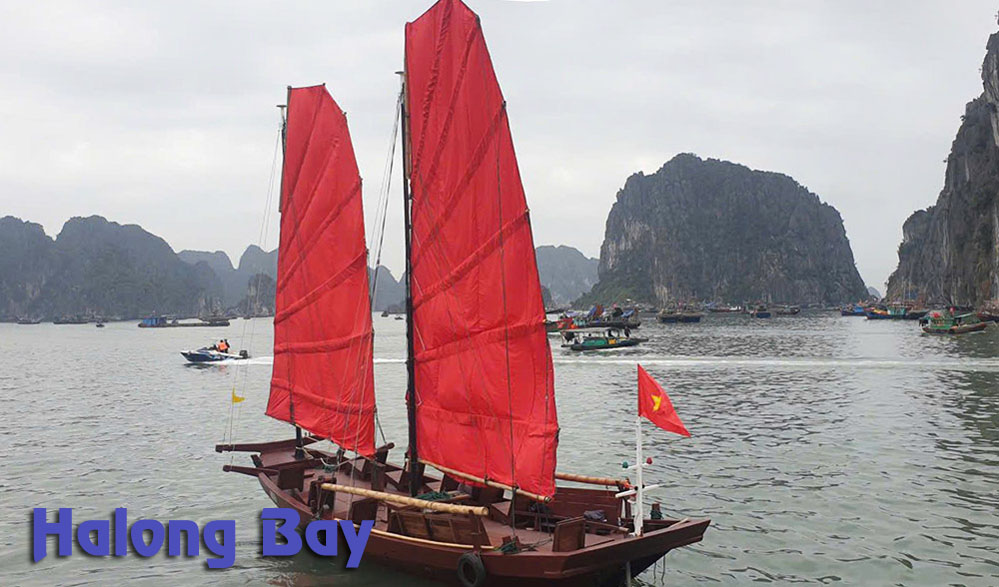
Halong Bay welcomes traditional red sails enhancing scenic beauty

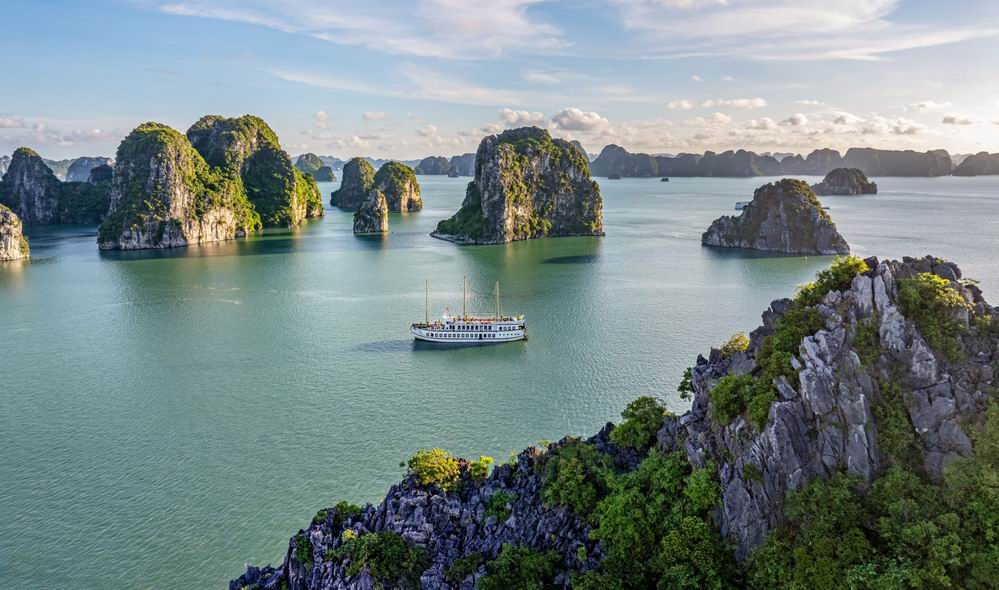
Cruise in Halong Bay - The vibrant red sails gliding across Ha Long Bay have attracted the attention of both locals and tourists in recent days.

Ha Long Bay, Bai Tu Long Bay, and Yen Tu National Forest are areas of exceptional value for nature, environmental, and cultural conservation, and play a key role in maintaining biodiversity and ecological balance.

These special-use forests create a unique ecological space, harmoniously connecting forests, seas, and limestone mountains, contributing to climate regulation, water resource protection, and erosion control. They also form an important ecological belt, contributing to the protection of the Ha Long Bay World Natural Heritage Site and the buffer zone of Bai Tu Long Bay.

In particular, Yen Tu National Forest is also closely associated with the historical, cultural, and spiritual depth of the Truc Lam Zen sect, creating a unique heritage space with special spiritual value within the Yen Tu - Vinh Nghiem - Con Son - Kiet Bac World Heritage complex.

According to representatives of the Ha Long Bay - Yen Tu World Heritage Management Board, special-use forests protecting the landscape not only have conservation significance but also serve as a foundation for developing sustainable ecotourism, resort tourism, and nature experiences. Rational exploitation will contribute to diversifying tourism products, creating livelihoods for local communities, and promoting socio-economic development.

In parallel with the ecotourism project, the unit is also developing and submitting to competent authorities for approval a sustainable forest management plan for Ha Long Bay, Bai Tu Long National Park, and Yen Tu National Forest for the period 2026-2030.

At the same time, major projects such as enhancing the value of the World Natural Heritage site of Ha Long Bay and preserving and promoting the value of the Yen Tu historical site within the Yen Tu - Vinh Nghiem - Con Son - Kiet Bac World Cultural Heritage complex are also being implemented.

It is expected that in 2026, the Management Board will continue to finalize the Plan for Sustainable Tourism Development of Ha Long Bay World Heritage Site until 2035, with a vision to 2050.

In addition, coordinate with relevant units to accelerate the completion of infrastructure for waterways, ensuring that 3 sightseeing and tourism routes within Bai Tu Long National Park are ready for operation, and advise on connecting the routes of Ha Long Bay with Lan Ha Bay.

Future development orientations also focus on strengthening regional linkages, connecting tourism in Ha Long Bay - Bai Tu Long Bay - Van Don; and linking Ha Long Bay tourism with the Yen Tu - Vinh Nghiem - Con Son, Kiet Bac heritage chain and other tourist areas and destinations in the province.

Besides renewing and improving the quality of existing tourism products, the Management Board will focus on developing new tourism product chains, prioritizing beach and island tourism, ecotourism, high-end resort tourism, and cultural, spiritual, and heritage tourism.

In particular, offshore tours such as Ha Long Bay 3 and Ha Long Bay 4 will be organized and exploited in a scientific and rational manner, ensuring they are compatible with the carrying capacity and sustainable development space of Ha Long Bay and Bai Tu Long Bay.

Source: https://cruise-halong-bay.com/news/ancient-boat-designs-shine-in-halong-bay.asp

Perfume Pagoda Festival strengthens cultural and spiritual tourism

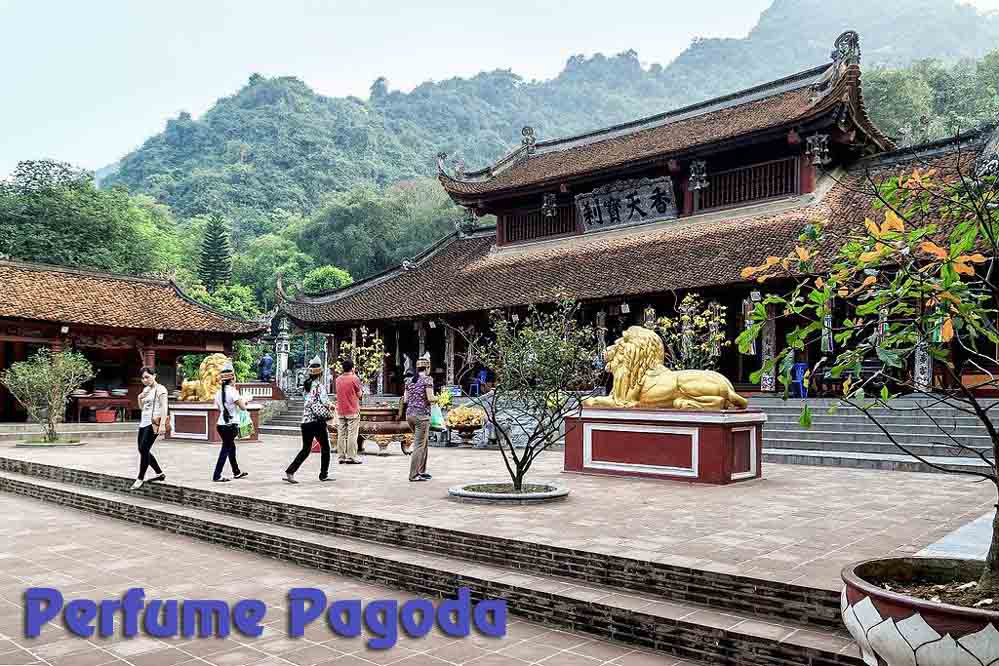
Budget Vietnam tours - The Perfume Pagoda festival 2026 is being held in the context of Hanoi's goal of developing the area into a national tourist destination. Along with renovating the space and replanning the docks, the organizing committee has also announced the pricing structure for boat tickets, scenic spots, and cable car rides for the upcoming festival season.


The 2026 Festival takes place at a crucial time, as Hanoi aims to develop this special national historical site into a national tourist area by 2026, while simultaneously completing the dossier to submit to UNESCO for recognition of as Perfume Pagoda a World Natural and Cultural Heritage site by 2030.

According to the plan, the festival will have the overarching theme of "Safety - Friendliness - Quality", organized in accordance with legal regulations, ensuring solemnity and civility, while also meeting the cultural and spiritual needs of the people and tourists. The festival will take place from February 18th to May 11th, which is from the 2nd day of the first lunar month to the 25th day of the third lunar month of the Year of the Horse, the opening ceremony will be held on February 22nd (the 6th day of the first lunar month).

The festival space encompasses the entire complex of historical relics with 4 main tour routes, including 20 temples, pagodas, and Buddhist caves. The main ceremonies are held at Thien Tru Pagoda, Huong Tich Cave, and the system of temples and pagodas in the area, ensuring the preservation of solemnity and sacredness.

A notable aspect of this year's festival season is the intensified efforts to reorganize and re-plan wharves and service spaces. Authorities are focusing on addressing land encroachment and unauthorized trading within protected historical sites, reclaiming public land whose use rights have expired, and gradually restoring open and unobstructed landscapes in key areas such as Yen Stream, ferry docks, Thien Tru Pagoda, and Huong Tich Cave.

Simultaneously, the management model is implemented according to the "six clear principles": clear person, clear task, clear time, clear responsibility, clear product, and clear effectiveness. Security and order , road and waterway traffic safety, fire prevention and control, rescue operations, food safety, healthcare, and environmental sanitation are given top priority.

From the 2026 festival season onwards, the organization and management activities will be enhanced with digital transformation: entrance tickets and boat tickets will be electronic and QR code-based; AI camera systems will be installed at key locations; and an operations center and hotline will operate continuously to receive feedback from tourists.

Regarding ticket sales, visitors can purchase tickets directly at six fixed locations, including parking lots 1 to 4, the Sao Sa parking lot management office, the Yen parking lot management office; at the automatic ticket vending machine at Thien Tru parking lot; or online on the festival website.

Electric vehicles continue to be piloted on the routes of Hoi Xa - Yen Vy ferry terminal, Duc Khe - Truot Dong Cu ferry terminal (opposite Trinh Temple) and Road No. 1 - Tuyet Son pagoda terminal at a price of 20,000 VND/person/trip.

For boat transportation, the Organizing Committee operates according to a set schedule. The Huong Tich route uses an adult ticket price of 120,000 VND for the scenic area and 110,000 VND for the boat fare, totaling 230,000 VND per trip; a discounted ticket is 170,000 VND per trip; children are free of charge for the scenic area but pay 65,000 VND for the boat fare.

The Long Van - Tuyet Son route does not charge an entrance fee; the boat ticket costs 85,000 VND per trip for adults and 50,000 VND per trip for children. For private trips, additional boat tickets must be purchased, with a minimum of 6 people per vessel.

With the cable car service, the operating plan is designed to be flexible, prioritizing the elderly, children, pregnant women, and people with disabilities; and is ready to temporarily suspend operations when the Huong Tich Cave area becomes overloaded.

Round-trip cable car tickets cost 260,000 VND per adult and 180,000 VND per child; one-way tickets cost 180,000 VND and 120,000 VND respectively; discounted tickets are equivalent to one-way fares.

Following the traditional festival season, from May to December 2026, Huong Son commune will continue to implement year-round tourism activities , organize cultural, sports, and art events; promote local agricultural products and specialties; and develop meditation, ecological, and spiritual tourism.

With comprehensive preparations ranging from planning of wharfs and parking areas, tightening service management, to transparent announcement of ticket prices, the 2026 Perfume Pagoda Festival is expected to be safe, civilized, and lay the foundation for sustainable development, contributing to making Perfume Pagoda a typical cultural and spiritual destination of the capital and the whole country.

Source: https://budgetvietnamtours.com/news/hanoi-plans-perfume-pagoda-as-national-tourist-destination.asp

Wednesday, February 11, 2026

Ethnic identities drive surge in international interest for Sapa tourism

Train Hanoi to Sapa - In January 2026 alone, Lao Cai province is estimated to have welcomed over 951,000 tourists, reaching 8.43% of the annual plan. This result demonstrates the strong appeal of tourism in Lao Cai, especially in the international market.


Lao Cai, with its experiential tourism, ecotourism, and cultural tourism products linked to the unique identities of its ethnic groups, continues to be a highlight, attracting the attention of a large number of tourists.

Located right in the heart of Sa Pa ward, this tourist destination, run by a community-connected cultural cooperative, is a popular meeting point for many foreign tourists whenever they visit. Although it only opened at the beginning of 2026, it welcomes thousands of visitors each week who come to explore, experience, and use its services.

Ms. Hoang Thi Vuong, General Director of the Community Connection Cultural Cooperative, said that building cultural tourism products associated with the identity of ethnic minorities has created a great attraction for tourists.

"This space is a miniature Sapa, showcasing the cultural life of the Mong, Dao, Tay, and Xa Pho ethnic groups. We invite artisans to perform for tourists. After a short time, visitors want to come and interact and explore. Every weekend, we have 200-300 visitors". Vuong said.

In the overall tourism landscape of Lao Cai, Sa Pa continues to be the brightest spot with over 345,000 visitors, accounting for approximately 36% of the province's total. A series of tourism events organized by the local authorities, with the highlight being the winter festivals associated with the New Year celebrations, attracted hundreds of thousands of domestic and international tourists.

According to To Ngoc Lien, Chairman of Sa Pa Ward, the locality is focusing on improving transportation and tourism infrastructure, and strengthening links with satellite communes to diversify tourism products.

Lien said: "We divided the areas into zones such as: areas needing urban development and infrastructure, areas needing preservation, and areas for developing homestays with high standards. We also delineated areas that need preservation, areas for tourism development, and areas for homestay development to create a connected and integrated area".

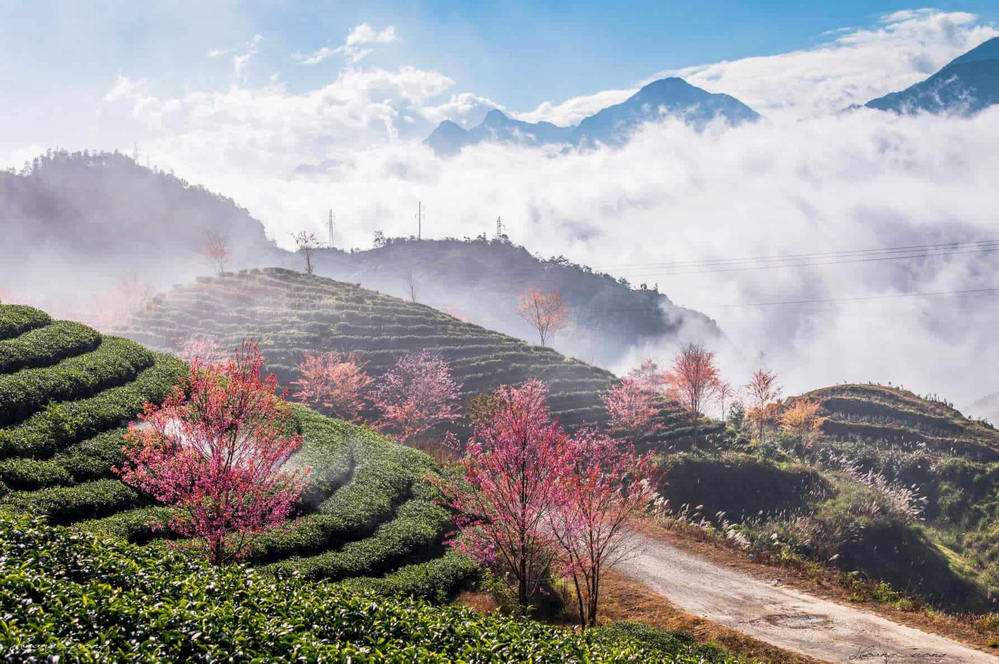
Along with Sa Pa, neighbouring destinations such as Mu Cang Chai, Y Ty, and Bac Ha have also recorded a high increase in visitor numbers. From the vibrant flower seasons to the sweet fruit ripening seasons, these localities are effectively exploiting their natural advantages to develop tourism. In Bac Ha, the plum blossoms covering the hillsides have left many tourists amazed and delighted.

A tourist from Hanoi, said: "I think this is a gift from nature to the people in this mountainous region, enabling them to develop their economy and change their lives."

Sa Pa continues to be the biggest highlight with over 345,000 visitors, accounting for approximately 36% of the total number of visitors in the province.

Director of the Department of Culture, Sports and Tourism of Lao Cai province, said that with positive signs from the beginning of the year, Lao Cai has high expectations for a breakthrough year in tourism.

"With the efforts of the tourism industry, the business community, and the localities, we are confident and hopeful that the above goals will be realized by 2026," Binh said.

In 2026, Lao Cai aims to welcome over 11 million tourists, including 1.5 million international visitors, with total tourism revenue reaching 51,000 billion VND. The positive signs in the first month of the year are further boosting confidence for Lao Cai's tourism sector, paving the way for a successful and sustainable year of development.

Source: https://sapatrainticket.com/travel-news/sapa-remains-leading-destination-for-in-northern-vietnam/

Ecotourism in Halong and Bai Tu Long Bay balancing conservation and development

Indochina Junk - The Management Board of the Ha Long Bay - Yen Tu World Heritage Site is implementing a plan to develop tourism products that meet international standards for submission to competent authorities for consideration. One of the key contents is the Project on ecotourism, resort, and entertainment in the protected special-use forests of Ha Long Bay, Bai Tu Long Bay, and Yen Tu National Forest.


Ha Long Bay, Bai Tu Long Bay, and Yen Tu National Forest are areas of exceptional value for nature, environmental, and cultural conservation, and play a key role in maintaining biodiversity and ecological balance.

These special-use forests create a unique ecological space, harmoniously connecting forests, seas, and limestone mountains, contributing to climate regulation, water resource protection, and erosion control. They also form an important ecological belt, contributing to the protection of the Ha Long Bay World Natural Heritage Site and the buffer zone of Bai Tu Long Bay.

In particular, Yen Tu National Forest is also closely associated with the historical, cultural, and spiritual depth of the Truc Lam Zen sect, creating a unique heritage space with special spiritual value within the Yen Tu - Vinh Nghiem - Con Son - Kiet Bac World Heritage complex.

According to representatives of the Ha Long Bay - Yen Tu World Heritage Management Board, special-use forests protecting the landscape not only have conservation significance but also serve as a foundation for developing sustainable ecotourism, resort tourism, and nature experiences. Rational exploitation will contribute to diversifying tourism products, creating livelihoods for local communities, and promoting socio-economic development.

In parallel with the ecotourism project, the unit is also developing and submitting to competent authorities for approval a sustainable forest management plan for Ha Long Bay, Bai Tu Long National Park, and Yen Tu National Forest for the period 2026-2030.

At the same time, major projects such as enhancing the value of the World Natural Heritage site of Ha Long Bay and preserving and promoting the value of the Yen Tu historical site within the Yen Tu - Vinh Nghiem - Con Son - Kiet Bac World Cultural Heritage complex are also being implemented.

It is expected that in 2026, the Management Board will continue to finalize the Plan for Sustainable Tourism Development of Ha Long Bay World Heritage Site until 2035, with a vision to 2050.

In addition, coordinate with relevant units to accelerate the completion of infrastructure for waterways, ensuring that 3 sightseeing and tourism routes within Bai Tu Long National Park are ready for operation, and advise on connecting the routes of Ha Long Bay with Lan Ha Bay.

Future development orientations also focus on strengthening regional linkages, connecting tourism in Ha Long Bay - Bai Tu Long Bay - Van Don; and linking Ha Long Bay tourism with the Yen Tu - Vinh Nghiem - Con Son, Kiet Bac heritage chain and other tourist areas and destinations in the province.

Besides renewing and improving the quality of existing tourism products, the Management Board will focus on developing new tourism product chains, prioritizing beach and island tourism, ecotourism, high-end resort tourism, and cultural, spiritual, and heritage tourism.

In particular, offshore tours such as Ha Long Bay 3 and Ha Long Bay 4 will be organized and exploited in a scientific and rational manner, ensuring they are compatible with the carrying capacity and sustainable development space of Ha Long Bay and Bai Tu Long Bay.

Source: https://indochinajunkcruises.com/travel-news/unlocking-bai-tu-long-bay-special-use-forests-potential.htm

Sunday, February 8, 2026

Unwind in Pa Khom Bay, serene ecotourism haven in Lai Chau

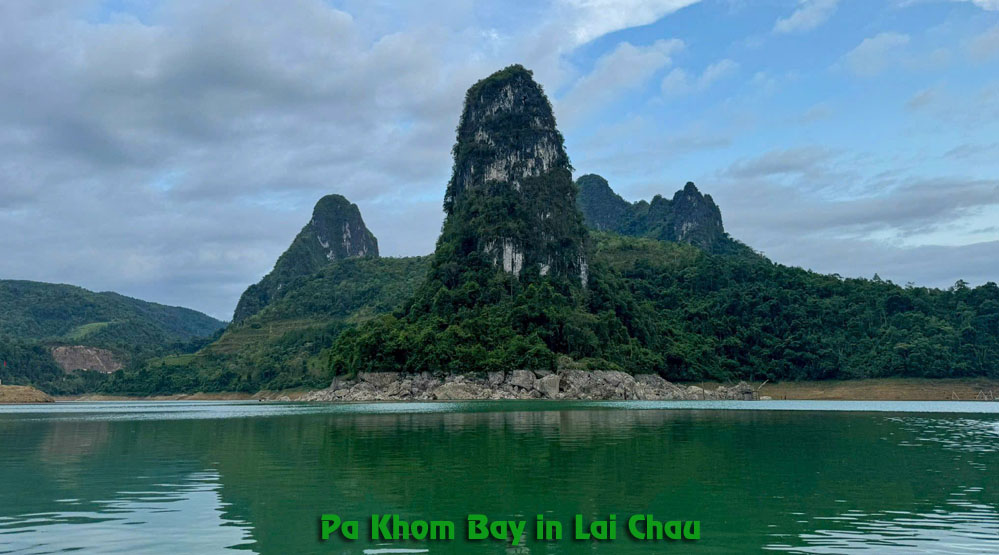
Northwest Vietnam travel - Pa Khom Bay in Pa Mu, Than Uyen district, Lai Chau province, is likened to "Ha Long Bay on land". It is increasingly attracting tourists who come to experience kayaking, hot spring bathing, and explore the unique culture of the indigenous ethnic groups in the far west of Vietnam.


Located more than 30 km southwest of Than Uyen town (Lai Chau province), along National Highway 279, is Pa Khom village in Pha Mu commune. This area is famous for Pa Khom Bay, often described as a miniature "Ha Long Bay" amidst the green plateau in the far west of Vietnam. Formed after the construction of the Ban Chat hydroelectric reservoir, Pa Khom Bay has become increasingly well-known to tourists from near and far.

Coming here visitors will be able to witness the pristine and majestic beauty, the breathtaking natural scenery of Pa Khom Bay. During this time of year, the dry season, the waters of Pa Khom Bay are calm, like a giant mirror reflecting the sky and clouds. Viewed from above, the bay resembles a basin nestled amidst primeval forests. The peaceful and rustic scenery offers a sense of relaxation, a respite from the hustle and bustle of city life.

Besides hiking along the winding paths that encircle the mountain slopes with their rich vegetation, the first experience in Pa Khom is renting a motorboat to travel across the lake from Tham Phe fishing village (Muong Kim commune). While traveling on the water, visitors can admire the majestic mountains along the shore and the vast forests.

For those who love sports and water activities, there are unique experiences such as kayaking, swimming, ziplining on the water, or fishing, bathing in hot mineral springs in the middle of the bay...

When visiting Pa Khom, one of the must-do experiences is enjoying the local cuisine. After sightseeing and admiring the scenery of mountains, water, and sky on Pa Khom Bay, the final step is to savor the culinary culture at the floating restaurants.

The specialties of the Northwest region are prepared by the local people themselves, using ingredients they raise, catch, and process, such as grilled stream fish, grilled pig, sticky rice from mountain fields, dishes made from green-necked ducks raised in Pa Khom, and dishes made from wild vegetables, all prepared with fresh ingredients and bearing the distinctive flavors of the mountains and forests.

Potential for developing ecotourism

Possessing many advantages and potential for ecotourism development, Pha Mu is now attracting more and more visitors for sightseeing and relaxation. It is known that, to develop tourism here, the roads leading to Pa Khom Bay have been upgraded and expanded by Lai Chau province, making it easier for tourists to access.

The roads from the center of Than Uyen district to the areas around the bay have been repaired and paved to ensure safety and convenience for tourists.

In addition, tourism services in Pha Mu have been boosted. Accommodation options such as homestays have begun to appear in villages around Pa Khom Bay, allowing tourists to experience the lives of the local people.

Many households in Pha Mu have joined in providing homestay accommodations for tourists who wish to stay and experience the area. Restaurants and eateries have also expanded, offering traditional dishes of the Northwest region for tourists to enjoy.

Pha Mu is also home to many ethnic minority groups such as the Thai, H'mong, and Dao. Each ethnic group has its own unique culture and customs, creating a unique and authentic local cultural space. Tourists can visit the villages around Pa Khom Bay to learn about traditional culture through activities such as wearing ethnic costumes, participating in festivals, or experiencing making handicrafts themselves.

Each of the four seasons in Pa Khom Bay possesses its own unique beauty. Every season offers a new and exciting experience with its distinctive nature and culture, making Pa Khom Bay a truly special place to visit at any time of year.

Autumn in Pa Khom Bay boasts a mild and pleasant climate with temperatures ranging from 18-25°C. This is the time when the terraced rice fields around Pa Khom Bay turn a brilliant golden color, signaling the harvest season. The golden rice paddies winding along the hillsides create a picturesque scene, especially in the morning when mist still hangs over the fields. Visitors can enjoy the scenery of the ripening rice, take photos, and participate in the harvest festivals of the local people. This is also a good time to experience hiking and exploring the mountains and valleys around the Bay.

Winter offers a unique experience amidst the mystical natural landscape, shrouded in a blanket of white mist. Visitors can participate in camping trips, enjoy warm local specialties such as smoked buffalo meat and corn wine, and join the locals around campfires, sharing stories of their culture and traditions. In spring, visitors can admire the vibrant blossoms and immerse themselves in the distinctive festivals of the local ethnic communities.

If you're lucky enough to visit Pa Mu during the festival season, you can participate in traditional local festivals such as the New Rice Harvest Festival like the Com Tan Pom Festival... This will be an opportunity to experience a unique cultural space with traditional dances, songs, and folk games that are distinctly local.

Source: https://northwestvietnamtours.com/information/experience-majestic-beauty-of-pa-khom-bay-in-the-northwest.php

Thung Ui where nature culture and spirituality blend

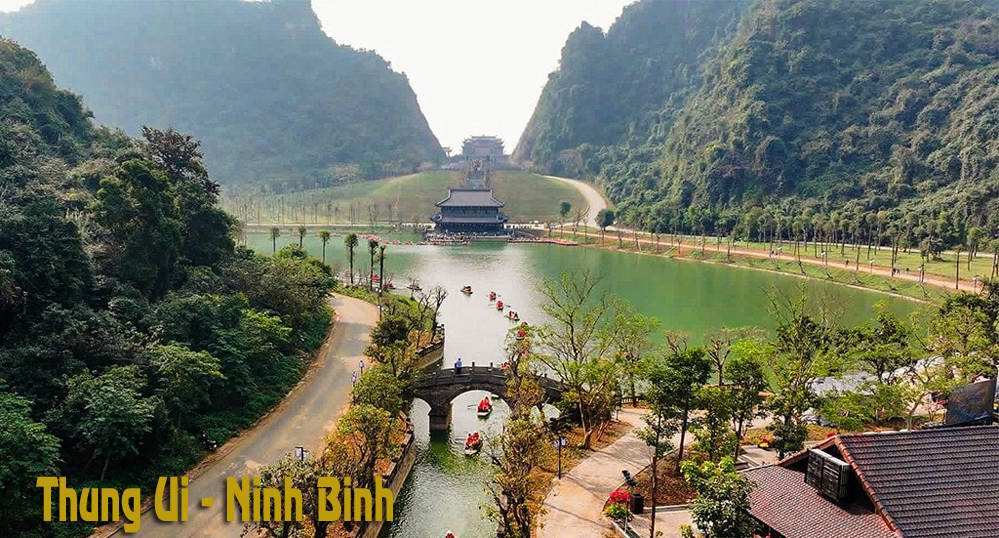
Ninh Binh tours - Over 2,000 representatives from travel agencies and tourists from dozens of provinces and cities across the country gathered at Thung Ui (Ninh Binh) to visit and survey this new cultural and spiritual tourism area.


The Ninh Binh Tourism Association recently collaborated with local businesses to organize a famtrip program to survey the Thung Ui tourist area and several other typical tourist destinations in the province.

The program attracted more than 2,000 delegates representing over 750 travel agencies nationwide.

Thung Ui is located in the Moc Hoan valley, part of the Trang An scenic complex. It's a relatively new tourist destination currently under development and is expected to be opened to visitors in the near future.

This place boasts pristine natural landscapes and a tranquil atmosphere, making it ideal for ecotourism, relaxation, and experiencing local culture.

The system of spiritual structures such as the Altar of Heaven, the Temple of Earth, the Temple of Humanity, the stilt house area... along with the lake and supporting facilities serving the development of cultural and religious tourism are gradually turning Thung Ui into a newly emerging destination, attracting a large number of tourists to visit, check-in and experience.

Through field surveys, many people expressed their admiration for the pristine beauty of the mountains, forests, and valleys, along with the relatively intact natural ecosystem. Furthermore, the preservation and promotion of the traditional cultural values of the Muong people in the Thung Ui area were highly appreciated by experts and travel businesses.

As part of the famtrip program, on February 3rd, the group visited, surveyed, and experienced some tourism services at prominent destinations in Ninh Binh province such as: Bai Dinh Pagoda, Dong Chuong Lake tourist area, Tam Chuc, Tam Coc - Bich Dong, and Trang An.

Delegates and visitors had the opportunity to explore cultural and spiritual sites, enjoy boat trips on the emerald-green waters, and participate in Muong cultural activities such as throwing the "con" (a traditional game), bamboo pole dancing, playing the "mang" (a traditional game), walking on stilts, playing gongs, and having bonfires.

Through this famtrip activity, the organizers hope that travel businesses will gain more practical information, thereby developing new tours and routes, and incorporating Thung Ui and other destinations in Ninh Binh into their programs for wider promotion to domestic and international tourists.

Source: https://ninhbinhtraveltour.com/travel-news/discover-the-unspoiled-beauty-of-thung-ui.asp

Thursday, February 5, 2026

Revitalizing the Red River a new era for Hanoi's tourism growth

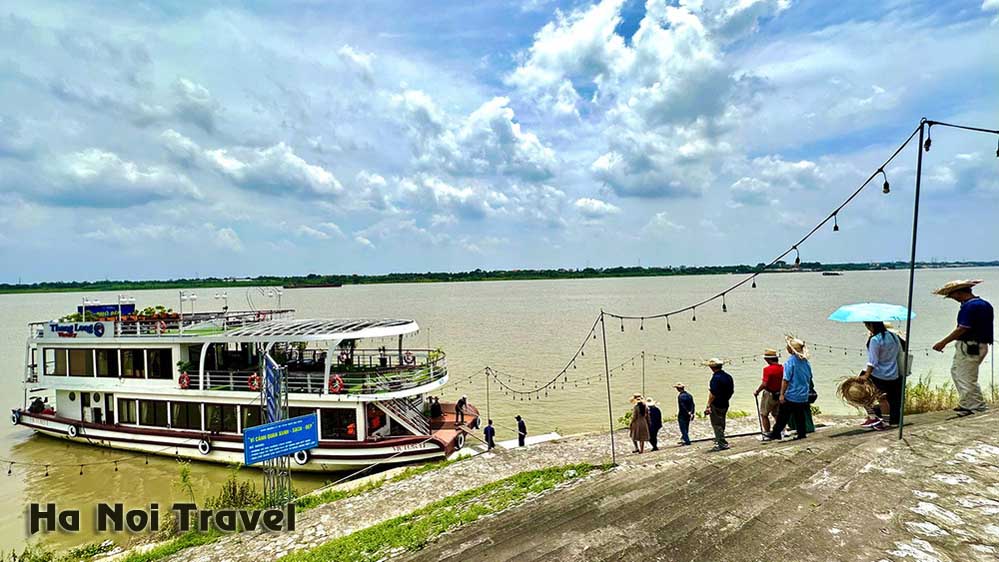
Hanoi tours - In the Master Plan for the Capital City with a 100-year vision, the Red River is identified as a strategic spatial axis, serving not only transportation and urban development but also as a highlight for tourism, ecology, and culture, connecting major landscape spaces of Hanoi.


With a long-term vision, the Red River axis is identified not only as a central ecological corridor but also as a new symbolic axis for cultural, tourism, and service development in the capital. This is the first time that the river, which has been closely associated with the history of Thang Long - Hanoi for thousands of years, has been placed in a central position in the urban development structure, instead of just being a flood drainage space and a natural boundary.

According to published plans and guidelines, the Red River axis will be organized as a continuous landscape boulevard, connecting cultural, historical, and creative spaces on both banks, from the Ba Vi - Son Tay area, through Co Loa, the historical inner city, to the eastern gateway region.

Along this axis, the city prioritizes the development of open public spaces, riverside parks, cultural squares, pedestrian walkways, tourist boat docks , and viewpoints, gradually creating a "riverfront" for Hanoi - something the capital has lacked for many decades.

In terms of tourism, the Red River axis is considered the backbone for restructuring urban tourism products, connecting heritage with contemporary experiences. Key destinations such as Thang Long Imperial Citadel, the Old Quarter, West Lake, Co Loa Citadel, ancient villages along the river, and the sandbars in the middle of the Red River will no longer develop in isolation but will be linked by interconnected waterway, road, and pedestrian zones. River tourism - which is still relatively underdeveloped in Hanoi - is expected to become a new distinctive product, complementing heritage and cultural tourism.

Notably, the Red River axis planning emphasizes the element of creative culture. The riverbanks, sandbars, and areas along the dike are oriented for flexible exploitation for festivals, art performances, outdoor exhibitions, and large-scale tourism and cultural events, thereby breathing new life into the riverine landscape that has been "frozen" for a long time. This also forms the basis for creating "event destinations" - a trend being pursued by many major cities around the world .

Alongside tourism, the Red River basin is also identified as a crucial ecological space, playing a role in regulating climate, protecting biodiversity, and improving urban quality of life. Development projects along the river must strictly adhere to regulations on flood control, ecosystem conservation, limiting concrete construction, and prioritizing green architecture and low-rise buildings. This is a key condition for sustainable riverside tourism development, avoiding the repetition of short-term exploitation models that put pressure on the environment.

From an economic and tourism perspective, the formation of the Red River axis is considered to open up new growth opportunities for Hanoi's tourism industry, extend the length of stay of tourists, disperse the flow of visitors away from the overcrowded inner city, and create more experiential spaces for the people.

When seamlessly integrated with strategic transportation axes and satellite urban systems, the Red River axis not only serves inner-city tourism but also plays a regional linking role, connecting Hanoi with neighboring tourism centers in the Capital Region.

Clearly, the Red River axis is not simply a planning project, but a new development declaration for Hanoi: bringing the river heritage back to the center of urban life, transforming the historical river into a driving force for tourism, culture, and creativity, contributing to shaping the image of the capital city in the long-term development phase.

Source: https://hanoitraveltour.com/news/unlocking-red-river-potential-for-hanoi-tourism-development.htm

Ha Giang charts a path to sustainable tourism success

Ha Giang Tours - Ha Giang, the northernmost province of Vietnam, has always attracted tourists with its majestic landscapes and unique cultural identity, and is now witnessing a tourism boom thanks to the impact of digital transformation.


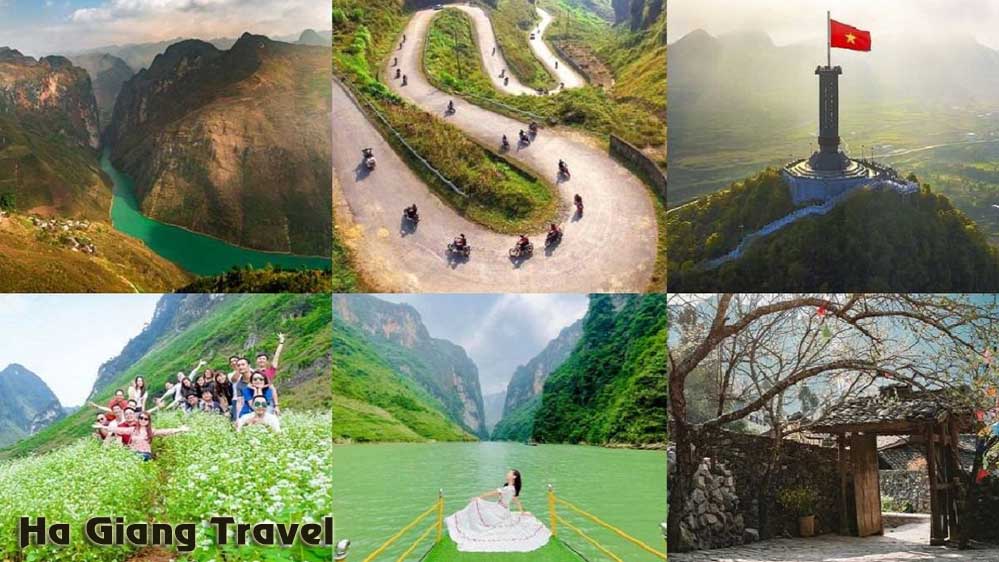
Images of the Dong Van Stone Plateau, Ma Pi Leng Pass, buckwheat flower season, and highland markets are being widely disseminated digitally, from tourism portals to social media and online booking platforms. Standardized information, professionally produced images, and digital transformation are fundamentally changing how a highland destination like Ha Giang connects with tourists. 

Many homestay households in Dong Van, Meo Vac, and Yen Minh have learned to use social media and booking platforms to proactively promote their services, manage guest schedules, and interact directly with tourists. Reducing reliance on intermediaries has helped increase the percentage of revenue retained by the local people. Many households have reported more stable income from tourism, especially during peak seasons.

Mr. Sinh Di Gai, the head of Lo Lo Chai village, is one of the pioneers of community tourism in the village, starting his homestay business in 2011 when the concept of community tourism was still quite unfamiliar. Today, he not only operates accommodation but also owns a TikTok channel with approximately 5,600 followers.

In the digital space, he both introduces tourism services and tells the story of Lo Lo culture, the rhythm of village life, and the highland landscapes that embody the soul of Ha Giang. This approach not only benefits his family but also contributes to promoting the overall image of Lo Lo Chai and Ha Giang tourism.

Handicrafts and local specialties such as mint honey, brocade fabrics, corn wine, and highland agricultural products, which are popular with many tourists, are also being sold by people in Ha Giang on e-commerce platforms, through social media, and via live streams directly to consumers.

Tourism, therefore, not only generates income from direct services but also drives the development of traditional crafts and local production. The economic value chain is expanded, enabling many households to participate in the Ha Giang "tourism ecosystem" in different ways, according to their conditions and capabilities.

Furthermore, digital transformation is also helping Ha Giang improve the quality of the tourist experience. Digital maps, QR codes, and automated audio guides at attractions such as the Vuong family mansion, Lung Cu flagpole, and Ma Pi Leng pass help tourists access information flexibly and in multiple languages, aligning with the trend of independent and personalized tourism.

Instead of simply "seeing the scenery," tourists have the opportunity to gain a deeper understanding of the history, culture, and stories behind each destination. The experience is enriched in depth, thereby extending the length of stay and increasing spending. This is a key factor in expanding the potential for sustainable income generation for local people and businesses in Ha Giang tourism.

Behind the development of digital tourism is the gradually improving telecommunications infrastructure. Internet coverage, 4G, and the gradual deployment of 5G in key tourist areas help people in mountainous regions access technology, creating favorable conditions for the effective operation of digital tourism business models. For tourists, stable telecommunications infrastructure also contributes to enhancing the experience, from searching for information and sharing itineraries to using digital services. 

In many villages, smartphones have become a new "productivity tool," helping people provide services, promote products, and connect with customers. This is a structural change that contributes to shifting the rural economic structure towards diversified livelihoods.

However, digital transformation also poses new demands. As the number of visitors increases rapidly due to the ripple effect in the digital environment, the pressure on infrastructure, the environment, and cultural identity grows. The exploitation of cultural content on digital platforms needs to be guided to avoid excessive commercialization.

In this context, digital transformation cannot be limited to technology alone, but must be linked to smart tourism management. Data on visitor numbers, travel patterns, and spending levels, if effectively utilized, will help local authorities regulate development, allocate tourists seasonally and along routes, ensuring a harmonious balance between economic benefits and conservation.

The Party Committee of Ha Giang province stated that in the new phase, it will promote the application of digital technology in tourism promotion and advertising; digitize information on recognized tourist areas and destinations, creating a digital database of tourist destinations, providing accurate, multilingual, and highly interactive information; install QR code systems at tourist sites to help tourists easily access information about destinations; and pilot the construction of smart information lookup and tour guide kiosks using robots and artificial intelligence (AI) to assist tourists in searching for information and enhancing their experience.

Digital transformation is opening up a path for sustainable and inclusive development for tourism in Ha Giang. There, economic benefits are closely linked to preserving cultural identity, and tourism not only brings in a stable flow of visitors but also creates long-term livelihoods, improves income, and enhances the quality of life for people in this northernmost region of Vietnam.

Source: https://hagiangtraveltour.com/news/digital-technology-unlocks-ha-giang-tourism-potential.asp